What is Nitinol?

By Andy March | Business Development Director at Viant

September 2026 | Andrew March is Business Development Director at Viant Medical, where he partners with customers across sales, manufacturing, and technical operations to accelerate new product development, optimize manufacturability, and uncover cost-saving opportunities in production. Known for his technical expertise, clear communication, and hands-on leadership, he focuses on building trust and long-term customer success.

Nitinol is a nickel-titanium alloy (NiTi) known for two behaviors that set it apart from conventional metals: shape memory and super elasticity. For medical device engineers evaluating materials for implantable or interventional devices, the real question behind “what is nitinol” isn’t just what it’s made of, but rather what these two material properties make possible. Nitinol’s unique ability to recover its shape after deformation enables device designs and performance characteristics that are near impossible to achieve with conventional implantable devices, making it one of the most important materials in modern medical device design.

For OEMs, these properties enable minimally invasive and implantable devices that can navigate complex anatomy, withstand repeated loading cycles, and reliably perform once deployed across nitinol medical applications including interventional, cardiovascular, structural heart, neurovascular, and orthopedic devices and components.

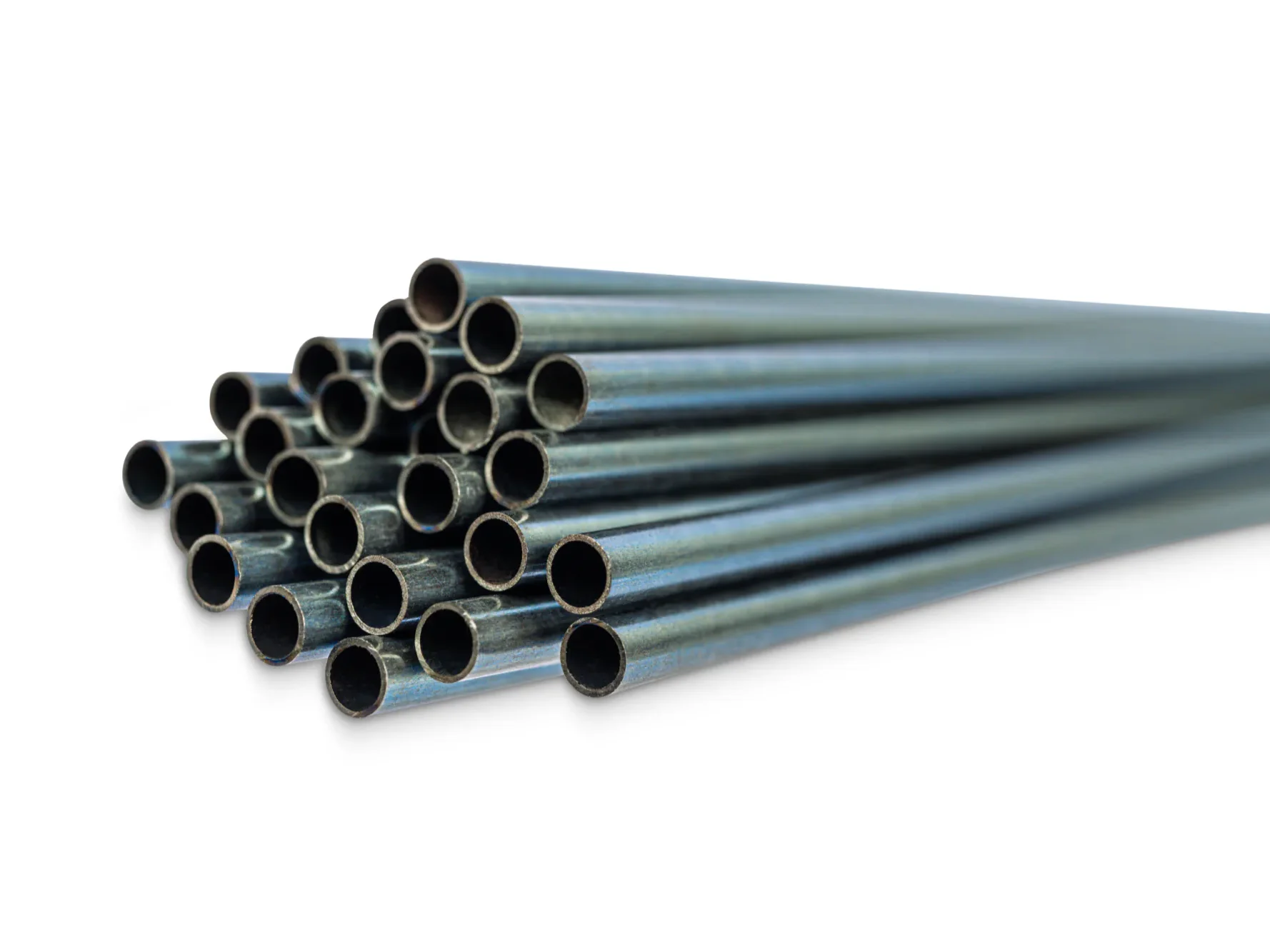
A bundle of metal medical tubes or hypotubes stacked together.

Nitinol Properties and the Shape Memory Effect

Nitinol is a near-equiatomic nickel-titanium alloy, meaning it consists of nearly equal amounts of nickel and titanium. Its distinguishing attribute from traditional metals used in medical devices is its ability to exhibit both a shape memory effect and superelasticity.

As a shape memory alloy, nitinol returns to a predetermined shape when heated to a point above a specific transformation temperature. A component can be deformed into a temporary configuration and later recover its original geometry when exposed to the appropriate temperature conditions.

Superelasticity, sometimes called pseudoelasticity, enables nitinol to undergo deformation under load and recover without permanent damage. Unlike traditional metals used in medical device manufacturing that can permanently bend when strained beyond their elastic limit, nitinol can flex significantly and return to its original shape, even at body temperature. This behavior is advantageous in medical devices that must navigate complex anatomy or repeatedly flex during use.

Nitinol derives these properties from a reversible phase transformation between two crystal structures known as martensite and austenite. The material’s internal structure changes in response to temperature and mechanical load, enabling the shape memory effect and superelastic behavior while maintaining predictable mechanical performance.

  • Biocompatibility
  • Corrosion Resistance
  • Fatigue Resistance

These characteristics support long-term device performance in demanding physiological environments.

Order Online for Fast Shipping

Small quantities of nitinol tubing are available for shipping with 24 hours at Chamfr.

What Happens When Nitinol Is Heated?

Engineer examining nitinol tubing for medical devices

Heating nitinol above a specific transformation temperature triggers the transition from martensite to austenite. This phase change is what enables the materials shape memory response, so a device component that has been deformed can recover its programmed shape once the appropriate temperature threshold is reached.

The transformation temperature can be adjusted through alloy chemistry, cold work, and heat treatment processes. Even relatively small changes in processing can significantly alter device performance, making precise manufacturing control critical. This step is especially important for implantable devices that must activate or perform predictably at body temperature.

The relationship between temperature, phase transformation, and mechanical performance is one of the reasons nitinol manufacturing requires deep materials expertise and tightly controlled processes.

What Is Nitinol Used For?

Nitinol medical applications span a range of technologies that take advantage of the material’s ability to flex, recover, and maintain performance under repeated loading conditions. Uses of nitinol for medical applications include:

  • Interventional Devices
  • Cardiovascular Devices
  • Structural Heart Devices
  • Neurovascular Devices
  • Orthopedic Devices
  • Orthodontic Devices


Two capabilities in particular make nitinol especially well-suited to minimally invasive design:

  • Device Miniaturization: Nitinol’s recoverable strain allows devices to be compressed into smaller delivery systems and subsequently deployed to significantly larger functional dimensions.
  • Reduced Permanent Set: components can undergo substantial deformation during delivery while maintaining their intended geometry after deployment.

Nitinol in Cardiac and Interventional Devices

One of the most common uses of nitinol is in cardiovascular and interventional devices. Self-expanding stents (coronary, peripheral, and neurovascular), guidewires, and catheter components often rely on the material’s  superelastic properties to navigate complex vascular anatomy and return to their intended shape once deployed.

Transcatheter valve delivery systems, including those used in TAVR (transcatheter aortic valve replacement) and TMVR (transcatheter mitral valve replacement) procedures, depend on nitinols ability to compress into a small delivery profile and then expand into a functional geometry once positioned. Nitinol is also central to neurovascular technologies, including stent retrievers and other devices built for delicate, hard-to-reach anatomy. The same combination of flexibility and shape recovery that supports vascular stents allows these devices to navigate tortuous pathways with minimal trauma, enhancing patient comfort throughout the procedure.

Close-up of several metal medical mesh stents and hypotubes arranged against a white background.

Nitinol in Orthopedic and Orthodontic Applications

Nitinol is widely used in orthopedic instruments and implants, where flexibility, fatigue resistance, and recovery characteristics can enhance device performance. Its ability to withstand repeated loading while maintaining its intended geometry makes it well suited to demanding orthopedic applications.

In orthodontics, nitinol’s superelasticity is valued in archwires and similar components, where the material delivers consistent, sustained force while accommodating significant deflection. This combination of resilience and predicable performance allows designers to create solutions across both load bearing and precision applications.

Why Is Nitinol Used in Medical Devices?

Nitinol is used in medical devices because its biocompatibility, shape memory, and superelastic recovery combine to enable smaller, self-expanding, and more flexible devices than conventional metals allow. These same properties make it suitable for implantable applications while supporting components that can withstand substantial deformation without permanent damage.

The material’s flexibility and kink resistance support navigation through challenging anatomy, making it particularly valuable for catheters, guidewires, and delivery systems. In addition, its fatigue resistance helps support long-term durability in devices exposed to repetitive loading or constant cyclic stress.

Together, these characteristics allow engineers to create devices that are smaller, more flexible, and more capable of achieving demanding clinical objectives while enhancing patient care and comfort.

Manufacturing Challenges: Why Nitinol Is Difficult to Process

Close-up of a laser welding or cutting machine emitting a bright green light on a metal component in a manufacturing facility.Nitinol’s material performance is tied directly to its transformation temperatures, which must be tightly controlled and verified throughout manufacturing. Heat treatment is particularly critical because it establishes both the transformation temperature and the shape memory behavior of the final component. Even small variations can affect device performance, so manufacturers must also maintain tight dimensional tolerance while preserving the material’s unique mechanical properties. The surface quality of nitinol is equally important. Surface defects can dramatically reduce fatigue life, making electropolishing, chemical processing, and surface characterization critical manufacturing steps. This is significant for implantable components, which often face stringent fatigue-life requirements and must perform reliably under constant cyclic loading. As a result, nitinol processing frequently relies on specialized manufacturing techniques such as precision laser cutting, electropolishing, shape setting, and advanced thermal processing rather than conventional metalworking methods. Joining operations also require specialized expertise. Welding, heat treatment, and  subsequent finishing process must be carefully controlled to preserve the material properties that make nitinol differentiated from other metals used in medical device manufacturing.

Partner With an Experienced Nitinol Manufacturer

Nitinol’s value ultimately depends on manufacturing execution. The material’s shape memory behavior, transformation temperature, fatigue resistance, and dimensional accuracy are all influenced by how effectively processing variables are controlled throughout production.

Because so much of nitinol’s performance is established during manufacturing, OEMs benefit from partners with proven expertise across the full development process, including:

  • Transformation temperature control to ensure components activate and perform predictably in their intended application.
  • Shape setting to establish and lock in the designed geometry
  • Fatigue performance qualification to verify long-term durability under repeated cyclic loading
  • Surface finishing, such as electropolishing and chemical processing, to maximize fatigue life and support biocompatibility.
  • Joining operations that preserve the material’s shape memory and superelastic properties.

A comprehensive command of these capabilities, combined with experience in precision tube processing and laser cutting, is essential to consistently translate innovative device concepts into scalable, high-quality production.

Nitinol FAQs

Can Nitinol be Welded or Soldered?

Nitinol can be welded, but the process requires careful control because excessive heat can alter the material’s shape memory and superelastic properties. Traditional soldering is generally not preferred because nitinol can form brittle intermetallic compounds with conventional solder materials, potentially affecting joint reliability.

Is Nitinol Stronger than Stainless Steel?

Not exactly; nitinol and stainless steel are designed for different mechanical requirements. Stainless steel generally offers higher stiffness, while nitinol provides a dramatically larger elastic strain range and unique superelastic behavior.

In applications requiring flexibility, recoverable deformation, and fatigue resistance, nitinol often delivers superior performance. In applications requiring high stiffness or lower cost, stainless steel may be preferred. One material is not universally stronger, rather the best choice depends on the specific mechanical and clinical demands of the device.

Two engineers operating a scanning electron microscope and viewing microscopic images on a computer monitor.

Want to learn more?

Connect with a Viant engineer to discuss whether or not nitinol is a good fit for your next device.

Related Resources

Manufacturing Capabilities

With an expansive global footprint, Viant offers unmatched manufacturing scale and speed. Our focused approach aligns your resources with our capabilities for maximum efficiency. Get expert advice on accelerating time to market, reducing lead times, mitigating validation risk, and ensuring product performance.